Why a Ground’s Edges Shape the Spectator’s Day
Rugby ground edges shape the view, atmosphere and flow around a match, helping you choose where to pause and how to read the playing space.
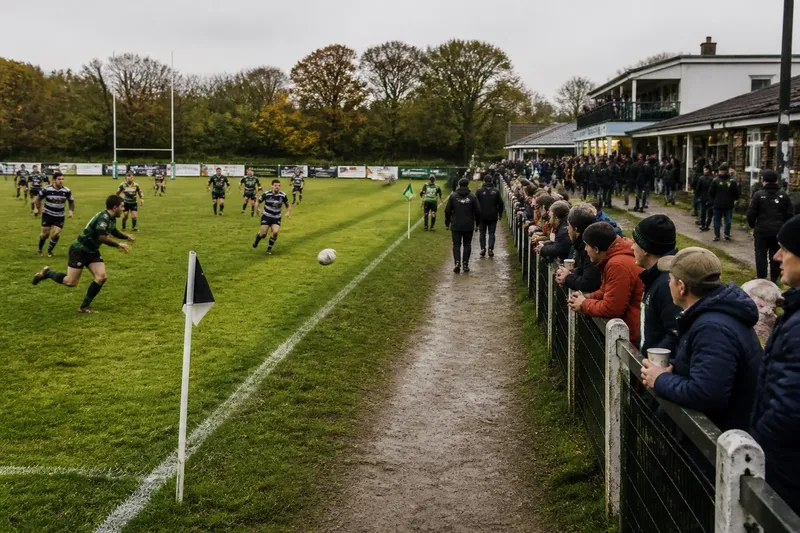
At a small rugby ground, a loose ball skims towards the touchline while a row of spectators leans forward behind the boundary fence. A few paces back, someone can see the whole attack unfold; close to the line, the players’ calls and sideline activity feel nearer. Rugby ground edges shape those different ways of watching, turning fences, paths and strips of open space into part of the matchday experience.
What counts as a ground’s edge?
The edges are the places where the playing area meets everything around it: touchlines, fences, corners, paths, the backs of stands and the gaps between buildings and field. They frame the view and influence how spectators gather, talk and move during a match.
A fence close to the touchline can make play feel immediate. A walkway or broad strip of grass between the fence and field creates more distance, but may also leave a clearer view across the pitch. Neither arrangement is automatically better. The difference lies in what you notice from each position.
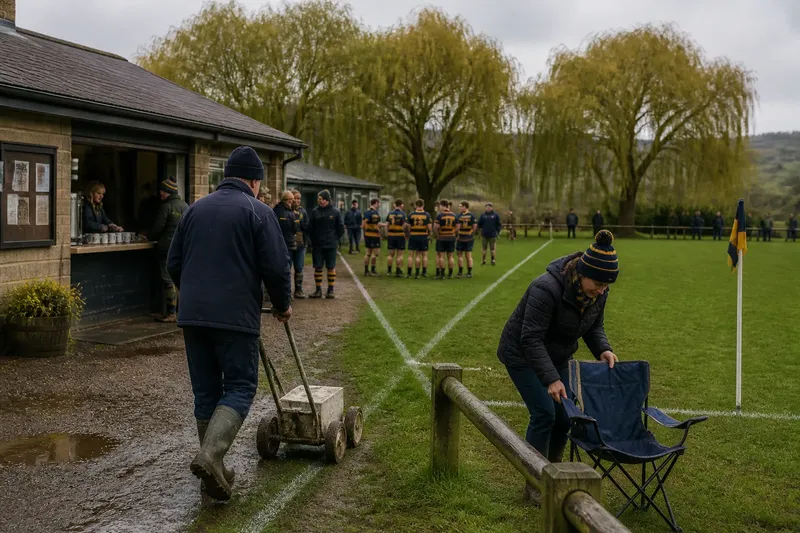
At community grounds, these margins often do several jobs at once. A path might carry spectators past the clubhouse, offer a place to watch warm-ups and connect the stand with the touchline. That overlap gives the ground its social character, but it can also make the edges busier than the field itself.
How does the boundary change your view?
From halfway, it is easier to follow how both teams spread across the field. Near an in-goal area, attacks at that end become more vivid, while play at the far end can feel remote. A corner offers a diagonal view that may reveal a developing move but make the opposite touchline harder to read.
Distance changes the balance between detail and overview. Close to the boundary, you may pick out substitutions, sideline conversations and the players’ movement at your end. A little farther back, the shape of the whole attack can be easier to follow. If a post, advertising board or group of standing spectators blocks part of the field, a short move along the boundary may open the view.
Try reading the space between you and the pitch, not just the pitch itself. A path can create a useful buffer and a broad sightline; an open grass margin may leave the ground feeling more informal. A raised seat can help you see over a crowd, while a pitch-level position brings you closer to the noise and pace.
What makes a path feel like part of the match?
Paths are more than routes between the gate, clubhouse, toilets and viewing areas. They are also places where people pause to talk, wait for friends or watch players warm up. A lively path can make a ground feel welcoming, provided there is room for others to pass.
Notice where routes narrow or cross. A pinch point beside a barrier can slow people moving in opposite directions, especially if someone stops to greet a friend. If you want to watch from a busy spot, choose a position that does not obstruct a route others need.
The surface affects the character of the walk as well. Paving can make a route feel distinct from the pitch-side grass, while a grass path keeps the spectator closer to the open field. In wet weather, the edge between a firm path and soft ground can become especially noticeable, so follow marked routes rather than cutting across the playing area.
How do boundaries shape the ground’s atmosphere?
A low fence with spectators gathered along it creates a close, informal edge. A stand set back behind a wider path can feel more spacious, with room to circulate between the field and seats. Neither layout dictates the mood: familiar faces, local voices and the rhythm of the match all contribute.
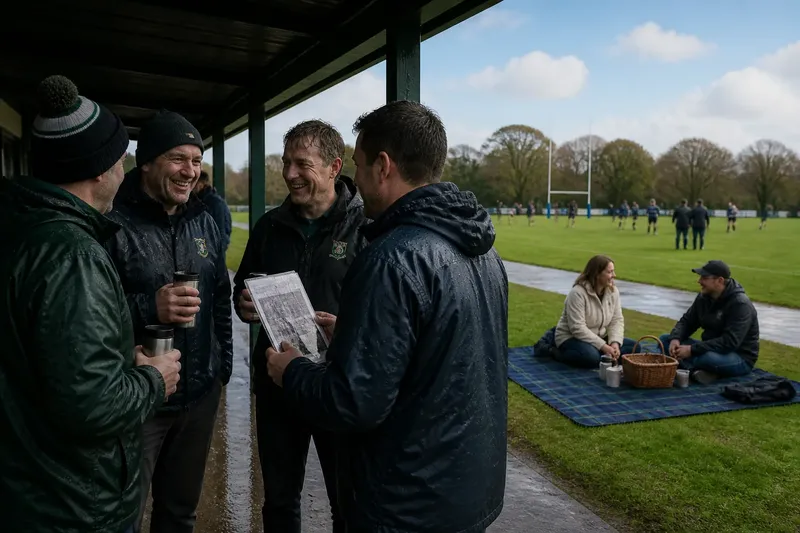
Grounds also direct attention through their layout. A clear view from a path towards the pitch draws the eye to the action; a clubhouse beside that route might invite a pause and a conversation first. On a rainy afternoon, the covered edge of a stand may become a shared refuge, while those along the fence watch the field through shifting coats and umbrellas.
Imagine a spectator arriving at a compact ground where the clubhouse path runs close to one corner. They pause there during warm-ups, then notice that people need the same strip to reach the stand. Moving a few paces to a space beside the fence leaves the route clear; the spectator can still see the players, while passers-by no longer have to weave around a stationary group.
Which questions help you read a rugby ground’s edges?
Can spectators always walk all the way around the pitch?
No. Fences, buildings, team areas or matchday arrangements may close part of the perimeter. Follow the signed spectator routes and directions from stewards rather than crossing into a restricted space.
Is the touchline always the best place to watch?
Not necessarily. A close position brings sideline detail into view, while a more central or raised spot can make the wider pattern of play easier to follow. Choose the view that suits what you want to notice.
Why do some grounds feel more intimate than others?
The distance between spectators and the pitch is one influence: a close boundary can make voices and movement feel immediate. The shape of the stand, the surrounding buildings and the way people gather also contribute to the sense of closeness.
Where should you stand if a view is partly blocked?
Look for an unoccupied place along the permitted spectator area where a post, board or crowd no longer cuts across the field. Avoid shifting into a marked restricted space or blocking a path to gain a clearer view.
What should you notice on your next visit?
As you watch, pay attention to how the edges affect your view and the flow of people nearby. These observations can help you decide where to stand or pause:
- Boundary distance: If the fence sits close to the touchline and you want to notice sideline detail, choose a clear position nearby; if you want a broader view, move back where permitted.
- View across the pitch: If a post or advertising board blocks play, move along the spectator area; if the view remains interrupted, choose another permitted position.
- Route width: If people are squeezing past a group on the path, stand aside or move to an open viewing spot; if the route is already clear, avoid creating a new obstruction.
- Ground surface: If the grass edge is soft or muddy, use the marked firm path; if that path is busy, wait for a clear moment rather than cutting across the playing area.
- Corner sightline: If the diagonal view helps you follow play, stay clear of the route; if the far touchline is difficult to see, try a more central position.
- Covered space: If rain makes an exposed spot uncomfortable, use an available covered spectator area; if it is crowded, leave room for others and find another permitted place.
Rugby ground edges are not merely the space left over after the pitch and stands are placed. They set the distance between spectator and action, give local customs room to grow and shape the small choices that make a match feel close or spacious. The next time you watch, a glance at the boundary can tell you as much about the ground as the view from the middle.