The Rugby Club Dinner Is Where a Club Remembers Itself
Rugby club dinner traditions turn a shared meal into living club memory, linking old stories, new players and the local customs that make a team feel like home.
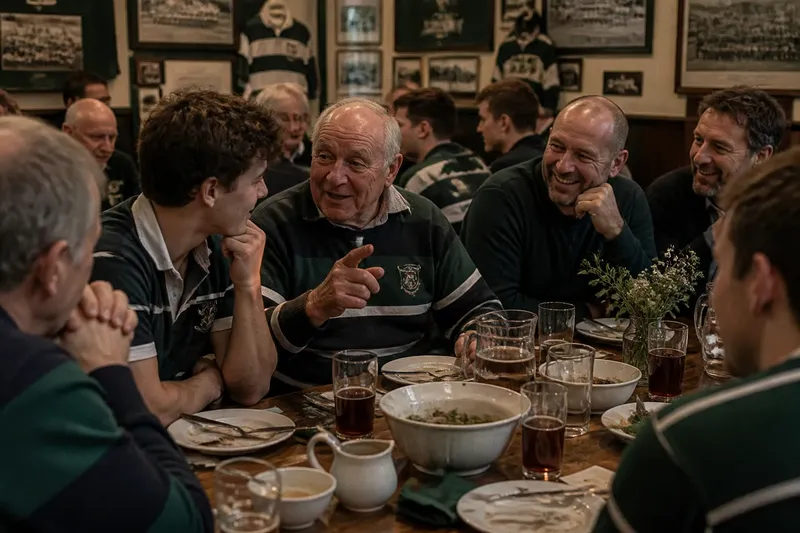
The plates are nearly cleared when someone at the far end of the table recalls the year the away side arrived with muddy boots and an appetite to match. Laughter travels along the bench; a newer player asks who was there, and the story begins again. A rugby club dinner is not just supper after a match. It is one of the ordinary places where a club learns how to remember.
How did the club dinner take root?
There is no single origin point for the rugby club dinner, and clubs have never all followed one script. Its roots lie in a practical habit common to team life: after players had travelled, trained or competed together, they ate together. A meal made room for conversation that the whistle, changing room and touchline could not hold.
As clubs became established in towns and villages, shared meals could also mark occasions: a fixture against a visiting side, a season’s opening or close, a touring party’s arrival, or a gathering of former players. The dinner offered a place to welcome guests and recognise those who had contributed to the club. The tradition grew through repetition rather than formal invention; one gathering made the next easier to arrange.
That history is best treated as local, not universal. A club’s own customs might be recorded in a committee minute book, a framed menu, a photograph, a fixture card or the recollections of members. Those traces can reveal how the gathering changed: perhaps a meal once held in a village hall moved to the clubhouse, or an annual formal dinner became a relaxed post-match table. The details matter more than a grand claim about how every club began.
What does a meal preserve that a trophy cannot?
A trophy records an outcome. A dinner can preserve the people and circumstances around it: who travelled, who lent a bus, who made room for a visiting team, who joined the club after moving to the area. These memories are rarely arranged like an official record. They surface in passing, attached to a name, a dish or a familiar ritual.
Food gives those recollections a physical anchor. Someone may remember a particular pudding served at the club’s annual gathering, or the long trestle table set up in a borrowed room. Another person may remember washing dishes beside a grandparent who had played for the same side. Such details make club history approachable to people who were not present for its celebrated matches.
Memory also changes as it is retold. A good host can make room for more than one version of a familiar story, especially when former players and newcomers are sharing a table. Instead of correcting every detail or turning an anecdote into legend, ask who else remembers the occasion and what they noticed. A club’s past becomes richer when its stories leave space for different voices.
Who keeps the tradition going?
The dinner often depends on people whose work is easy to overlook: the organiser who checks attendance, the cook who adapts the menu, the person who finds enough chairs, and the volunteer who stays to clear up. Their contribution is part of the tradition, not background scenery. A club that recognises the labour behind hospitality makes it easier for others to take a turn.
That recognition need not mean speeches or awards. A brief thank-you before the meal, a shared rota or a note of appreciation can make the work visible without making the occasion stiff. It can also prompt a useful question: is the event arranged so that a new volunteer can understand what needs doing, or does it rely on unwritten knowledge held by one person?
Imagine a club whose long-standing organiser is stepping back and whose usual dinner depends on a few familiar routines. A new committee member could ask for the old menu, booking details and a list of people who help, then invite former organisers to share what matters most to them. The expected result is a gathering that can continue while leaving room for a fresh host to shape it, rather than a tradition that disappears with one person’s departure.
How can a dinner welcome different generations?
Different generations may arrive with different expectations. Older members might value a familiar toast or a chance to catch up with former teammates; younger players may prefer an informal meal after a fixture, with time to talk before heading home. A thoughtful club need not choose one style forever. It can keep a recognisable thread while adapting the timing, formality and format to the people who are there.
Small choices send a clear message. Put newer players beside long-serving members rather than at a separate table. Invite guests to share a short memory, but do not make public speaking a condition of belonging. If a dinner includes a formal address, keep room for ordinary conversation before and after it. The event should feel like a club gathering, not a test of whether someone knows the customs already.
Names help stories travel. A photograph with a caption, a menu saved in a club archive, or a note identifying the people in an old team picture can give younger members a way into conversations. Ask permission before recording or sharing personal stories, and avoid treating one person’s memory as the complete account. A simple caption saying who, where and why the group met can be more useful than a polished speech forgotten by the following week.
Which details make a club dinner feel like its own?
Local character tends to live in modest details: the room the club borrows, the dish a volunteer reliably brings, the welcome given to visiting players, or the way the teams sit together after a fixture. These are not rules that every club needs to adopt. They are clues to what members already value, and they can be kept or changed deliberately rather than by accident.
A club can gather those clues without turning the evening into an archive project. Keep a menu or programme from each gathering, label photographs while people still recognise the faces, and jot down a few names and details after a memorable occasion. A noticeboard or a shared club folder can make those records findable. The aim is not to document every conversation; it is to leave a clear trail for someone who wonders how the custom began.
When a dinner is changing, tell people what is changing and why. If the club shifts from a formal annual meal to several smaller team suppers, explain what the organisers hope to preserve: perhaps the welcome for visitors, the reunion of former players or the chance for generations to meet. Members can then discuss the tradition itself, rather than assuming that a change in format means the club has stopped caring about its past.
What do people often ask about rugby club dinners?
Does every rugby club have a formal annual dinner?
No. Some clubs gather after selected fixtures, while others hold a seasonal meal or no regular dinner at all. The shared custom can matter without a fixed annual ceremony.
What belongs in a club dinner archive?
Menus, programmes, photographs with names and brief notes about the occasion are useful starting points. Keep identifying details accurate, and ask before preserving or sharing personal stories.
How can a new member join in without knowing the customs?
Offer a warm introduction, explain any toast or routine in plain language, and make participation optional. Sitting a newcomer with a welcoming mix of members can turn unfamiliar names into real connections.
Can a shared meal matter without speeches or awards?
Yes. Food, conversation and a place at the table can carry the tradition on their own. Recognition can be quiet, as simple as naming the people who made the gathering possible.
What should a club keep for the next generation?
Keep the parts that help people recognise one another: a welcome for visitors, a chance to hear older members’ memories, and a record that gives those memories names and context. Let the menu, venue and tone change when the people around the table need something different. The origins of a rugby club dinner are less important than the local choices that keep it meaningful.
At the next gathering, leave a little time after the plates are cleared. Ask an older member to identify the faces in a team photograph, then invite a newer player to say what they hope the club will remember about this season. That exchange is a small, practical act of inheritance: the club’s history is not only kept on a wall, but carried into the next conversation.