The Myth That Local Rugby Needs a Grandstand
A local rugby ground without a grandstand can still feel unmistakably its own. See how matchday rituals, club traditions and shared memories shape its character.
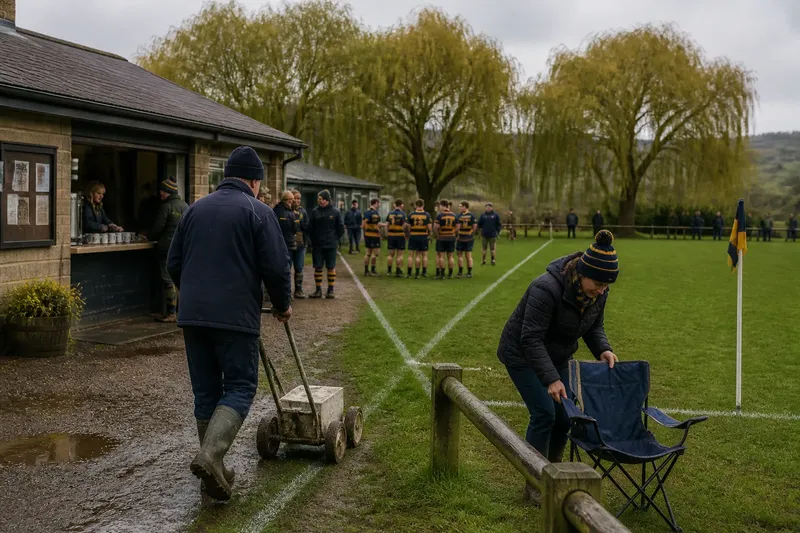
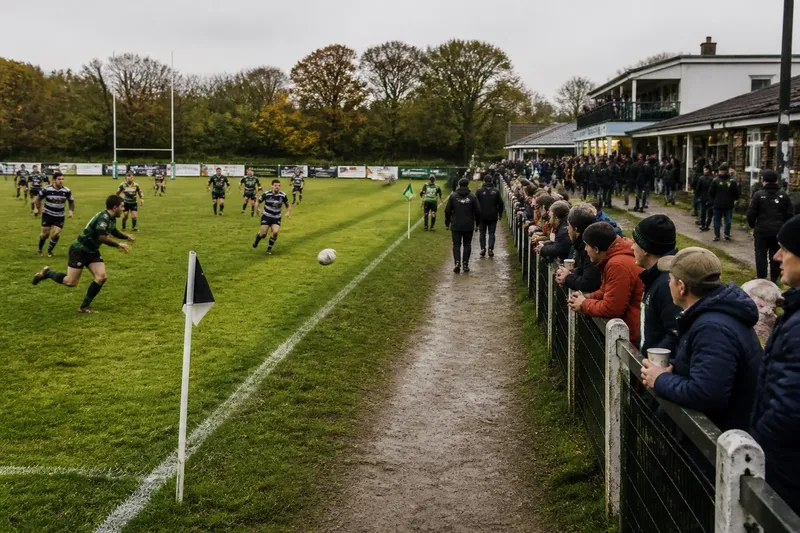
A groundskeeper wheels a line marker towards the pitch as a supporter folds a camping chair beside the touchline. Beyond the field, willows stir above the low clubhouse roof. A local rugby ground can feel like home without a grandstand—not because buildings do not matter, but because a club’s identity grows through the things people do together.
Stands often become the most visible feature in photographs, but a familiar song, a team’s colours or a tradition carried from one season to the next can matter just as much to people who return. These customs are not decoration. They give a matchday its own texture and connect the club to the neighbourhood around it.
Consider an invented club, Alderbank RFC, playing on a field beside a community hall. Its small shelter faces one touchline; willows line the far side. There is no raised seating. Over an imagined season, players, volunteers and supporters give the place character through rituals, club history and links to other local groups.
How do matchday rituals give a ground its character?
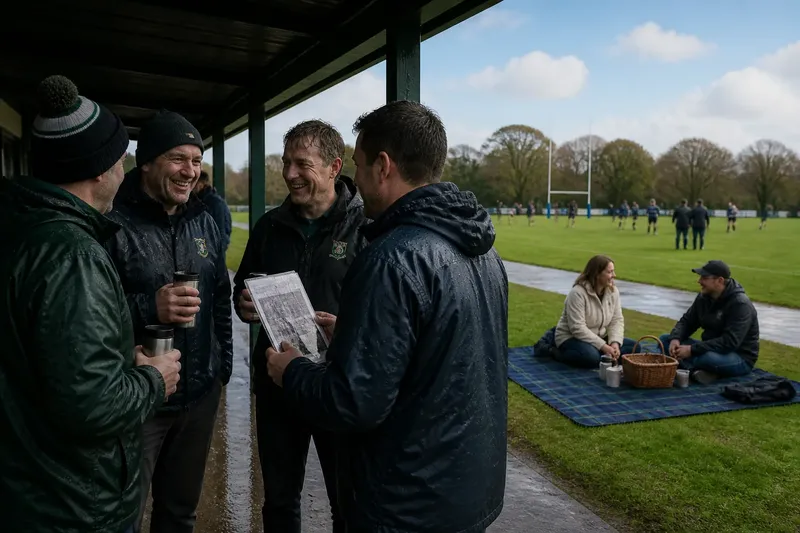
Some rituals are as ordinary as putting the kettle on before the teams arrive. At Alderbank, an imagined volunteer sets out mugs at the clubhouse hatch, while players gather for a familiar warm-up routine. The actions are simple; their repetition gives the day a recognisable shape.
Supporters, too, can make a place feel like itself. They might clap a particular moment, share a quiet greeting with the referee, or call out a phrase associated with the club. A tradition need not be loud or elaborate. What matters is that people understand its meaning and choose to carry it on.
Say an invented newcomer, Jo, attends an Alderbank fixture with no knowledge of the club’s customs. A regular explains why supporters pause for a moment before kick-off, then Jo sees the team gather in a familiar huddle. The observable result is that Jo can follow the ritual and decide whether to join in, without needing a grandstand or a formal welcome to understand that the moment matters here.
What can a club’s history add to the matchday?
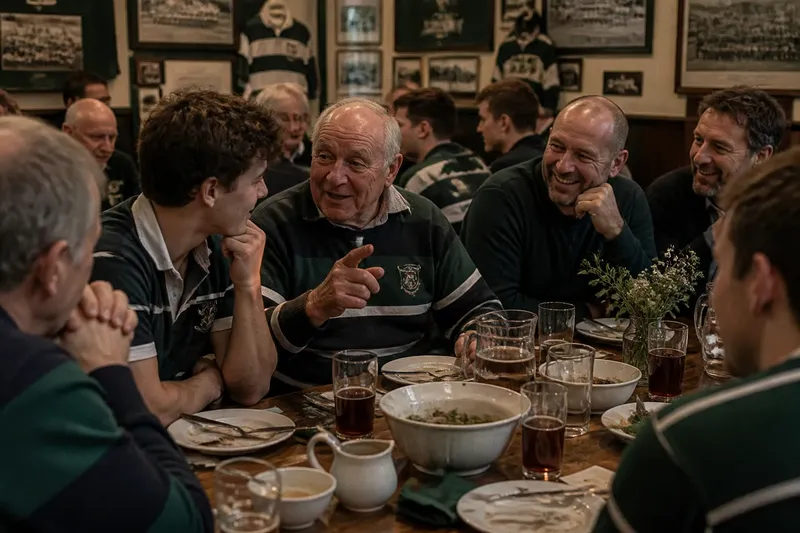
A clubhouse noticeboard can hold more than team sheets. Old photographs, a faded fixture card or a handwritten account of a memorable local cup tie can prompt conversation between generations. The objects need not be rare or perfectly preserved: their value lies in the stories people attach to them.
Imagine Alderbank’s fictional committee finding an old team photograph in a cupboard while tidying the clubhouse. A volunteer asks a long-serving supporter to identify the players, writes down the names they remember, and pins the photograph beside the current squad list. The visible result is a small display that links past and present; the trade-off is that someone must check that names and recollections are presented respectfully and accurately.
History also comes from what a club chooses to remember. A season may be recalled for a hard-fought fixture, a player’s return after injury, or the day a junior side first ran out alongside the senior team. These stories are more personal than a building, and they can travel with members even when they play elsewhere.
How can local customs include more people?
Customs can make newcomers feel part of a club, but only if the invitation is clear. An unfamiliar chant, an unexplained ceremony or an assumed contribution can leave a visitor unsure of what to do. A brief explanation and an easy option to watch rather than participate keep a tradition welcoming.
A club can also make room for different ways of taking part. Some people may enjoy singing from the touchline; others might prefer to help prepare tea, keep a fixture scrapbook or simply watch. These contributions do not need to look alike to belong to the same matchday.
For an invented example, imagine Alderbank deciding to mark its last home fixture with a shared club song. The organiser prints the words on the noticeboard, explains that joining in is optional, and asks a player to lead the first line. The expected observable result is that supporters can recognise the invitation and choose whether to sing; the alternative is to enjoy the moment quietly without being singled out.
What customs help a club feel connected to its neighbourhood?
A local ground sits among other routines: school events, community-hall meetings, local fêtes and the work of nearby volunteers. A club’s identity can reflect those connections without turning every fixture into a formal occasion. Sharing a noticeboard, inviting a local group to help with a tea rota or displaying artwork from a nearby school can make the relationship visible.
Suppose, in an invented scenario, Alderbank shares its community hall with a youth music group. The club asks the group to choose a piece for the pre-match gathering, then credits the performers on the clubhouse board. The expected result is a recognisable contribution from another part of local life; the trade-off is that both groups need to agree on timing and responsibilities.
These links should feel mutual, not like a club borrowing local colour for display. Listening to neighbours, crediting their contributions and keeping shared spaces tidy are modest ways to show that the connection runs in both directions.
Which local rugby traditions do readers ask about?
Does a club need a long history to have meaningful traditions?
No. A newer club can begin with a small, repeated custom, such as a team greeting before kick-off or a shared cup of tea afterwards. A tradition gains meaning through the people who choose to continue it.
How can a visitor learn what a club’s rituals mean?
Ask a volunteer or supporter what is happening, or look for a short explanation on the club noticeboard. A friendly explanation should make participation optional rather than treating an unfamiliar custom as a test.
What if a club’s old customs no longer suit everyone?
Members can talk about what the custom means and whether its purpose can be kept in a more welcoming form. Explain any change openly, and leave room for people to share memories without requiring the old practice to continue unchanged.
Can a small club preserve its history without a dedicated archive?
Yes. A labelled box of programmes, a noticeboard display or a shared digital album can keep useful memories accessible. Ask permission before sharing personal photographs or stories, and add names only when they are known.
How can a club keep its traditions alive and welcoming?
Small choices can help a tradition remain clear, shared and true to the club. For each item below, the observation points to a practical decision and an alternative if it does not fit.
- Noticeboard explanation: Check whether a newcomer can tell what a ceremony means; if the purpose is unclear, add a short explanation, or ask a volunteer to explain it in person.
- Optional participation: Check whether people can watch without joining a chant or ritual; if not, say explicitly that participation is optional, or offer a quiet way to take part.
- Shared responsibilities: Check whether one volunteer carries the same custom every time; if so, invite others to share the task, or simplify the custom if nobody can take it on.
- Accurate memories: Check whether names and dates on a display are known; if they are uncertain, label them as unconfirmed, or leave them out until someone can verify them.
- Room for new members: Check whether a tradition assumes everyone knows the words or steps; if it does, provide a prompt, or choose a simpler version that newcomers can follow.
- Neighbourhood partnership: Check whether a shared event has clear roles for both groups; if duties are unclear, agree who does what, or keep the activity separate until both sides are ready.
For an invented worked example, Alderbank has three starting inputs: an old team photograph with uncertain names, a noticeboard beside the clubhouse hatch and a volunteer who can speak with a former player. The volunteer asks about the photograph, writes down only the names the former player can identify, and marks the remaining faces as unknown. The committee then pins it beside the current team list with a note explaining the uncertainty. The resulting decision is to display the image without presenting guesses as fact; if no names can be confirmed, the club can show the photograph with a general caption instead.
What lasts after a local rugby match?
At the end of Alderbank’s imagined fixture, the mugs return to the clubhouse and players carry their kit away. The shelter and willows have not changed, but another matchday has added a story: a song sung, a photograph discussed or a newcomer shown how the club marks the moment before kick-off.
A grandstand can serve a useful purpose, but it is only one part of a ground’s life. Local rugby ground character also grows from the customs people share and the memories they pass on. A club can keep that character alive by explaining its traditions, making participation a choice and giving each new generation room to add a story of its own.